Flooring in San Francisco and the Peninsula: what’s different here
Eichler slabs, old houses, microclimates and condos with sound rules. Here’s what homeowners in San Francisco, on the Peninsula and in the South Bay should know before a flooring project.
Older homes and original wood floors
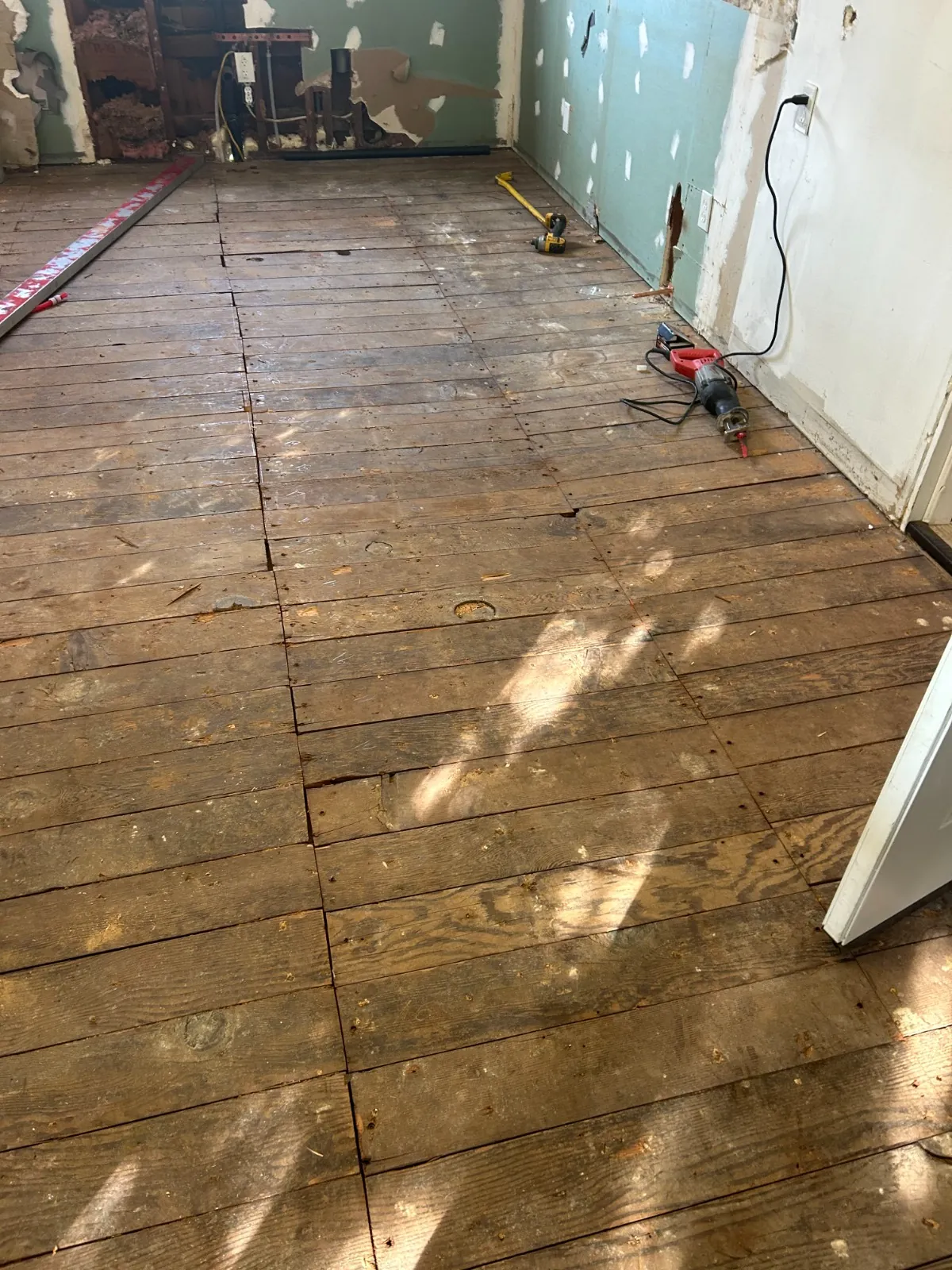
Many older San Francisco homes have original Douglas fir or oak floors. Which one depends largely on when the house was built. Fir is softer and dents more easily than oak, but it can often be sanded and refinished.
In some houses the original floor is hiding under carpet or a later layer. Before you replace a floor, it’s worth checking what’s underneath.
Raised foundations and slabs
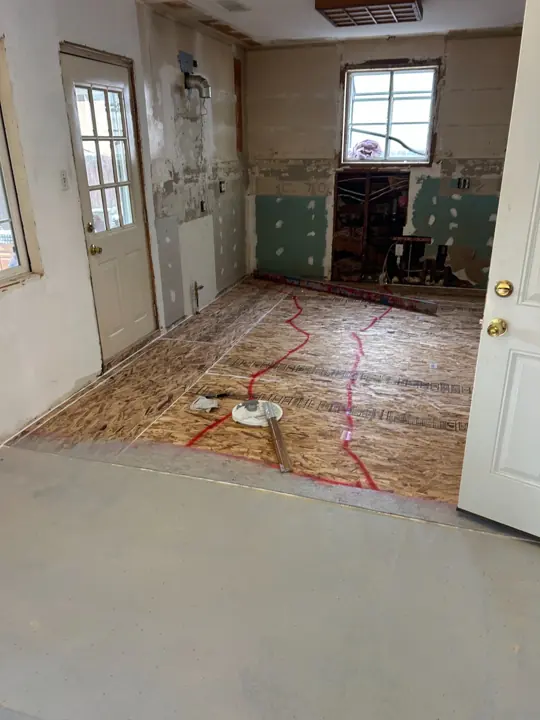
A house on a raised foundation lets you inspect the subfloor and joists from below. That’s where soft spots, old water damage and squeaks usually start. A house or ground floor on a slab needs a moisture check before any wood or glue-down floor goes in.
Eichlers and radiant heat
Palo Alto and the nearby Peninsula have one of the largest concentrations of Eichler homes. Most sit on a concrete slab with radiant heating pipes cast inside it.
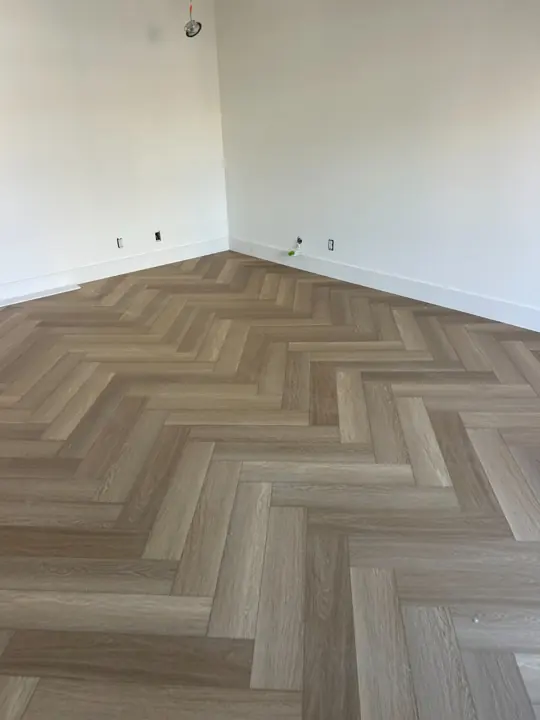
That changes the job. Nothing gets nailed into the slab. The floor has to be rated for radiant heat, which usually means engineered wood or vinyl plank, floated or glued down. Check the manufacturer’s temperature limits. Older radiant systems can leak, so it’s worth checking for warm or damp spots before the slab gets covered.
Microclimates and moisture
A foggy morning in the Sunset feels nothing like a summer afternoon in San Jose. Wood takes on and loses moisture with the air around it, so wood flooring needs time on site to adjust before installation.
Industry guidance from the National Wood Flooring Association, as reported by trade sources, calls for the flooring and a wood subfloor to be within 4% moisture content of each other for strips under 3 inches wide, and within 2% for wider planks. A moisture meter reading matters more than a number of days on the calendar.
Condos and sound rules
In multi-unit buildings, the floor between units has to block impact noise. San Francisco’s building department guidance sets an Impact Insulation Class (IIC) of 50, or 45 when tested in the field, for residential buildings permitted after August 1974.
Many HOAs go further and require approval before hard flooring goes in. California courts have upheld an HOA’s right to restrict flooring to prevent noise (Ryland Mews HOA v. Munoz, 2015). Check your CC&Rs before you choose a floor. A rated underlayment is usually part of the answer.
Permits
In San Francisco, installing or replacing floor coverings outside bathrooms is generally exempt from a building permit, as long as required flooring isn’t removed. Bathrooms are not covered by that exemption, and plumbing or electrical work needs its own permits. Other Bay Area cities set their own rules, so check with your local building department.
Asbestos and lead in older homes
Vinyl floor tiles, especially the 9 by 9 inch kind, and black adhesive from before the 1980s may contain asbestos. Treat them as suspect until a lab test says otherwise. Never sand or grind them.
In the Bay Area, asbestos removal falls under the Bay Area Air Quality Management District’s Regulation 11, Rule 2, which includes notification requirements. Covering intact tiles with a new floor is sometimes an option.
Homes built before 1978 may have lead paint on baseboards and trim. Disturbing it falls under the EPA’s lead-safe work rules.
Sources
- Inman: Don’t call fir floors hardwood
- Hardwood Floors magazine: measuring moisture in wood subflooring
- San Francisco Building Code, administrative bulletins (sound transmission)
- Davis-Stirling: Hardwood floors in condos
- SF.gov: Check if your construction project needs a permit
- BAAQMD: Asbestos demolition and renovation notification
- Fine Homebuilding: Handling asbestos tile